
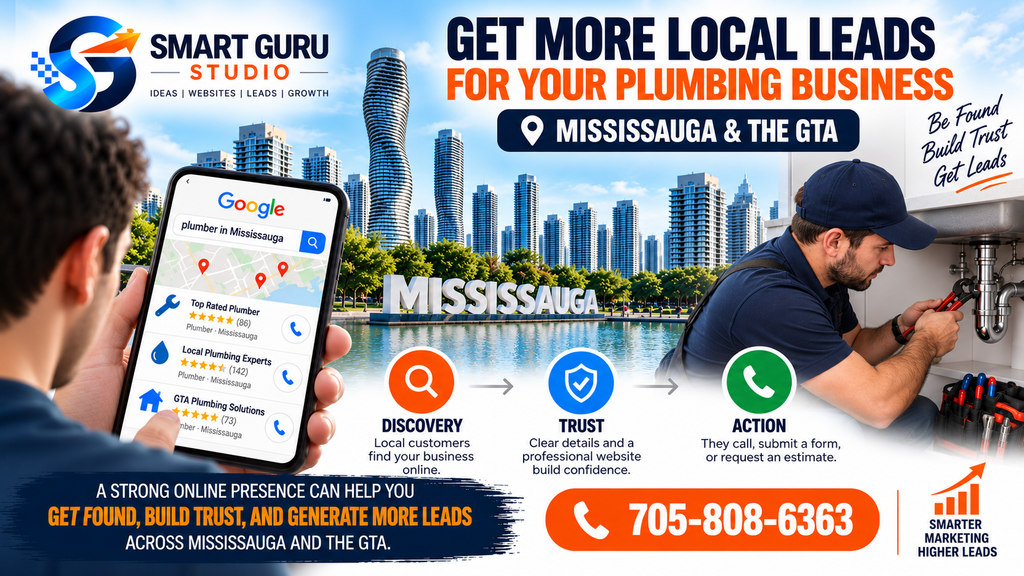
A nearby customer searches for a plumber in Mississauga and sees several businesses offering similar services. If your details are unclear or your website is hard to use, that customer may choose another option.

A lead is a prospective customer who takes a step toward buying, such as calling, submitting a form, or requesting an estimate. Useful marketing connects discovery, trust, and an easy next step, so local customers can find you and act with confidence.
A focused online presence can support visibility and lead generation across Mississauga and the GTA. You do not need to do everything at once. Start by finding what makes it harder for the right people to contact your business.
Key Takeaways
- Check whether your offer and service area are clear.
- Make accurate business details easy to find.
- Give mobile visitors a simple way to contact you.
- Track which marketing activity brings useful leads.
- Choose a focused next step that fits your goal.
What Is Holding Back Your Local Leads?
Weak leads often come from a mismatch between what customers need and what your online experience makes easy. A local business can attract visits yet lose potential customers when key details or next steps are missing.
Before adding more marketing, check where that mismatch may be. These questions can help you spot a basic gap in your offer, website, or lead tracking.
- Can customers quickly understand your offer, who it helps, and which areas you serve?
- Can customers find accurate business details, including your name, phone number, address, and hours?
- Can someone using a mobile phone find your services and contact your business without extra effort?
- Can you tell which marketing sources lead to calls, forms, or estimate requests?
These checks matter before you spend more on marketing. Paying to send more visitors to a page that fails to explain your offer or show a clear contact step can waste budget.
Your target audience may also need different information from the people already finding you. A home-service customer may need to know your service area, while a shop visitor may need directions and current hours.
Fix the clearest barrier first, then check whether the change helps customers take action. The right fix depends on your business goal, so next consider which services deserve your time and budget.
Which Digital Marketing Services for Small Businesses in Mississauga Should You Prioritize?
The best starting service is the one that addresses your clearest barrier to qualified inquiries. Digital marketing works better when you match a service to a specific business need, rather than trying every channel at once.
Use this comparison to choose a first focus. A small business can start with one or two priorities instead of spreading limited time and budget across every channel.
| Service | Best starting purpose | Useful success signal | Prioritize it when |
|---|---|---|---|
| SEO and blog content | Improve visibility for relevant searches | More visits from useful searches | Customers research before choosing |
| Local SEO and Google Business Profile | Make a nearby business easier to find | More profile visits and local leads | Customers search within your service area |
| Website design | Help visitors complete an inquiry | More calls or forms from site visits | People visit but do not contact you |
| Paid ads | Bring paid visits to a focused offer | Qualified leads from tracked campaigns | You need to promote a timely service |
| Social media | Build audience familiarity | Useful replies, visits, or inquiries | Customers follow brands before buying |
These digital marketing services can support different stages of a customer’s decision. SEO and social media may help people learn about your business, while a clear website gives them a place to act.
A marketing agency can help you weigh these options, but your first choice should still reflect your own business needs. If visitors cannot tell what you offer, start with your brand and website before adding more traffic sources.
How Do Branding and Website Design Turn Visits Into Inquiries?
A visitor may reach your website and still leave if the page does not explain what your business does or how to contact you. Clear branding and useful website design help people understand your offer and choose a next step.
Check your site from a mobile phone, where small text, crowded menus, or hidden contact details can slow someone down. Mobile-first layouts and responsive development help pages work across screen sizes.
Smart Guru Studio offers branding and website design services to support a consistent online presence. A practical review should check whether your service proposition is clear, your brand looks consistent, and each page is easy to read.
Make contact options visible, and include trust information that helps visitors judge your business. Relevant details might include your service areas, work examples, customer feedback, or what happens after someone sends an inquiry.
A short inquiry form can make contact simpler. Ask only for details needed to respond, such as a name, contact method, and brief description of the requested service.
Attractive visuals alone will not fix confusing navigation or an unclear offer. Clear page hierarchy, readable text, and well-designed forms support the visitor’s path toward an inquiry.
A sound website foundation still needs accurate local discovery. Your next step is to make sure nearby customers can find current information about your business.
How Can Google Business Profile and Local SEO Reach Nearby Customers?
A nearby customer searches for a service, compares local listings, and decides which business to contact. Local SEO and an accurate Google Business Profile can help your business appear more useful during that search.
Smart Guru Studio offers Google Business Profile optimization as part of its local marketing support. For Mississauga digital visibility, your profile and website should give customers clear, current details about your business and service area.
- Claim your Google Business Profile or review the details already shown.
- Keep your business name and contact details consistent across directories and platforms.
- Choose accurate business categories and list the services you provide.
- Add useful photos and keep hours and other information current.
- Direct visitors to a website page that matches their search or need.
A storefront can highlight its address, hours, and directions. A service-area business may need to make its coverage clear, especially when it travels to customers instead of serving them at a public location.
Local SEO can also include location-page structure, consistent business details, map visibility, and relevant location signals on your website. These details help customers understand where you work and whether you serve them.
A common mistake is treating a profile as a one-time setup. Hours, services, and contact details can change, so keep them current as your business changes.
Local listings support discovery, while site content can answer broader questions about your work. That makes SEO and helpful blog content useful parts of a wider online presence.
What Can SEO and Blog Content Build Over Time?
SEO helps connect your business pages with relevant searches, while useful content supports customer research. Search engine optimization can make your services easier to find through unpaid search results over time.
Service pages and blog posts serve different needs. A service page helps people compare providers, while a blog post can answer questions earlier in a customer’s decision process.
Keyword research should reflect how customers describe their needs, not just industry terms. A homeowner might search for a repair by describing the problem, then compare businesses offering that service.
Useful blog content answers a real question and links naturally to a relevant service page. Broad posts with no connection to your services or locations may attract attention without helping your business.
SEO work can include technical audits, crawlability checks, and improvements to site structure. It can also include service-page updates, internal links, content planning, backlink building, and reporting tied to leads and organic traffic.
Clear, well-structured pages can also help search tools and answer-focused experiences interpret what your business offers. Plain headings and focused pages make your service information easier to follow.
This work builds over time and needs ongoing attention. PPC offers more control over when an offer appears, and can bring paid visitors sooner once a campaign is set up.
When Do Paid Ads Make Sense for a Small Business?
Paid ads can make sense when you have an available service slot and want to reach people actively looking for that service. PPC can focus on a clear offer, location, or period when your team can respond to inquiries.
Before launching paid advertising, decide what action should count as a lead. Clicks show that someone visited, but they do not prove that the visit brought business value.
- Choose one clear goal, such as calls or estimate requests.
- Target relevant searches or audiences tied to your offer and service area.
- Connect each ad to a landing page that matches its promise.
- Track calls or forms so you can review the leads, not clicks alone.
PPC management can include account structure, keyword strategy, and negative keywords. Negative keywords help reduce spend on searches that do not fit your services.
Conversion tracking can show whether people call or submit a form after seeing an ad. A campaign also needs reporting that considers lead quality, not just click volume.
Ad creatives are the words and visuals people see in a campaign. Use them to state the offer and next step plainly, without suggesting an outcome you cannot promise.
Keep your landing page aligned with the ad, and make sure someone can answer inquiries promptly. Paid reach can bring people to your offer, while social channels help your audience become familiar with your business over time.
How Should Social Media Support Local Growth?
A customer may see a useful social media post today, then return to your business when ready to inquire. Social channels can build familiarity, support trust, and keep a business in view during a longer buying decision.
Choose platforms based on where your customers spend time and where your team can take part consistently. A simple rhythm that you can maintain is more useful than trying to appear everywhere.
Useful content can explain a service, show a project or product in context, or share staff expertise. You can also answer common questions that customers ask before they decide to contact you.
Smart Guru Studio offers social media support that can combine organic content with paid strategy. The right mix depends on your audience and the role social channels should play in your marketing.
Remarketing can re-engage people who have already shown interest in your business. Social touchpoints may support awareness and customer engagement while someone takes time to compare options.
Posting without a clear audience or purpose can use time without supporting a business goal. Set a reason for each post, such as explaining a service or helping customers understand what to expect.
Social activity works best within a focused plan, rather than as a separate task that competes with daily work. A small budget needs a clear order of priorities, too.
How Can You Build a Focused Digital Marketing Strategy on a Small Budget?
A small budget is easier to manage when it supports one business goal and a clear sequence of work. A focused digital marketing strategy helps your team decide what to do first and what can wait.
Use your current business situation to set that order. Protect the time and tools needed for the main priority, rather than dividing your budget among every possible service.
| Business situation | First priority | Protect | Postpone |
|---|---|---|---|
| Few qualified inquiries | Clarify the offer and local discovery | Time to answer new leads | More social platforms |
| Website visits but few inquiries | Review contact steps and page clarity | Website update time | More paid traffic |
| Steady demand but limited capacity | Improve lead handling and service fit | Staff time for current customers | Campaigns for extra demand |
| Past customers or inquiries need follow-up | Plan email follow-up with permission | Accurate contact records | New audience growth work |
Choose one primary business goal, then select a small number of channels that support it. Assign an owner for each task, even if that owner is you.
Email marketing can support automated follow-up after a lead-capture event. You can also send nurturing messages or re-engagement campaigns to earlier inquiries and existing customers, when you have permission to contact them.
Set a regular schedule to review progress and decide whether the work still fits your capacity. A plan should leave room to change priorities when customer demand or staff time shifts.
Clear goals and assigned tasks make progress easier to assess. The next step is to connect that activity to useful performance signals.
Which Marketing Metrics Show Whether Your Spend Is Working?
A meaningful marketing review connects activity to qualified inquiries and your business goal. Raw traffic, ad clicks, or social likes do not show whether the right customers are taking useful action.
Conversion rate is the share of tracked visitors who complete an intended action, such as calling or submitting a form. Review it alongside lead quality, so you can tell whether marketing is helping your business.
| Metric | What it tells you | A practical next decision |
|---|---|---|
| Qualified inquiries | Whether potential customers fit your service | Refine the offer if many leads do not fit |
| Conversion rate | Share of visitors completing an intended action | Review the page if few visitors act |
| Cost per lead | Average ad spend for each tracked lead | Adjust targeting or budget if cost is too high |
| Organic search visits | Visits from unpaid search results | Improve pages that attract the wrong searches |
| Paid-ad return or lead quality | Whether paid leads support business goals | Change the offer if leads rarely become customers |
When possible, connect calls and forms to their sources. That helps you see whether an inquiry came from search, an ad, or another marketing activity.
GA4, Search Console, and advertising-platform insights can help you review website traffic, engagement, lead generation, conversions, ad performance, and social-media engagement. Use the tools that fit your tracking needs.
Check the same useful signals on a regular schedule, then make one clear change at a time. If reporting is hard to understand, ask a digital marketing agency how it links activity to lead quality.
What Should You Ask a Digital Marketing Agency in Mississauga?
A suitable agency should explain its scope, decisions, and reporting in plain language. A marketing agency in Mississauga should also be able to discuss how its work fits your business, team, and local customers.
Ask these questions before agreeing to a service. Clear answers can help you compare a broad digital marketing agency with a specialist who handles one task.
- What experience do you have with local businesses like mine?
- How will you tailor the strategy to my goals and customers?
- What work is included, and what falls outside the scope?
- How will you report results and the quality of leads?
- Who will communicate with my business and handle day-to-day questions?
Clarify who can access your accounts and website, and who approves changes. Agree on how often you will review reports and how priorities may shift if the data is weak.
A company in Mississauga may not need a broad retainer for every marketing need. If you have one narrow, manageable task, a specialist for that task may be a better fit.
Compare answers based on how well each provider understands your goals and can explain its work. Once you know what support you need, consider the services Smart Guru Studio can provide across your online presence.
What Can Smart Guru Studio Support Across Your Digital Presence?
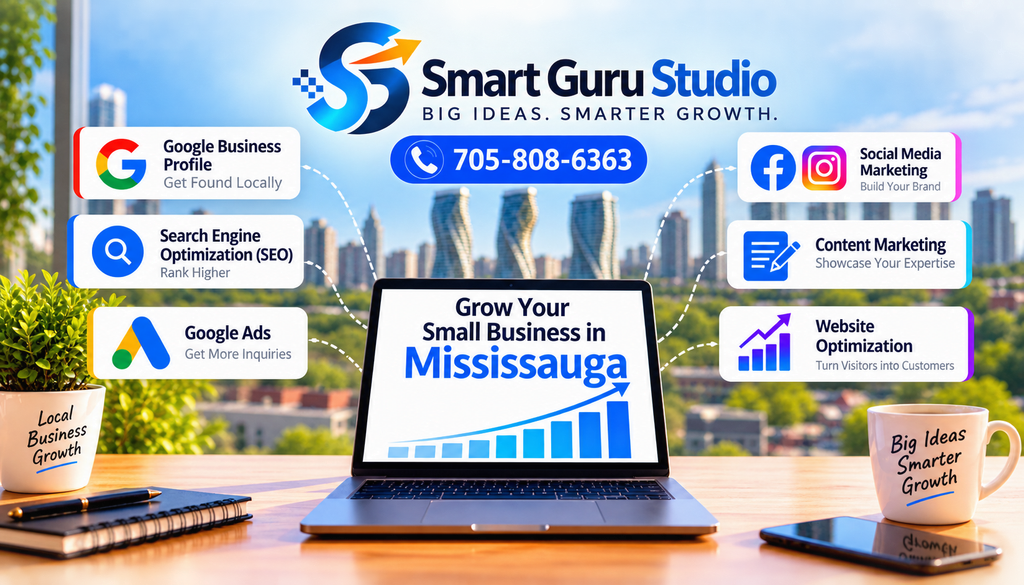
Smart Guru Studio can support several connected parts of a small business’s online presence. Its marketing services include branding, website design, Google Business Profile optimization, social media, SEO blog content, ad creatives, and digital growth support.
Branding and website design can help establish a clear foundation for your business online. Your brand and site can give customers a consistent way to understand your services and find key information.
Google Business Profile optimization and SEO blog content can support discovery in local and broader searches. Social media and ad creatives can help you communicate an offer or useful information to an audience.
Digital growth support can help coordinate priorities across connected work. That may be useful when your team is balancing several needs, but the right starting scope depends on your business goals.
Your existing assets, available time, and capacity to handle inquiries also matter. A new campaign may not suit a business that cannot respond to the extra calls or forms it hopes to attract.
Smart Guru Studio can discuss which support fits your current needs without assuming that every business needs the same services. You can bring your questions, current challenges, and business context to that conversation.
Start by identifying the business goal that matters most right now. Bring that priority to a conversation with Smart Guru Studio to discuss possible digital growth support.
Conclusion
Useful progress starts with a defined business goal and a realistic first priority. Identify what makes it harder for qualified local customers to contact you, then choose one step that addresses that barrier.
Your next step could be a clearer offer, an easier contact path, or more accurate local information. Pick a change that fits your time and capacity, then review whether it helps bring better inquiries.
Contact Smart Guru Studio to discuss your goals and potential digital growth support. Share what your business needs most, and start a conversation about a practical way forward.